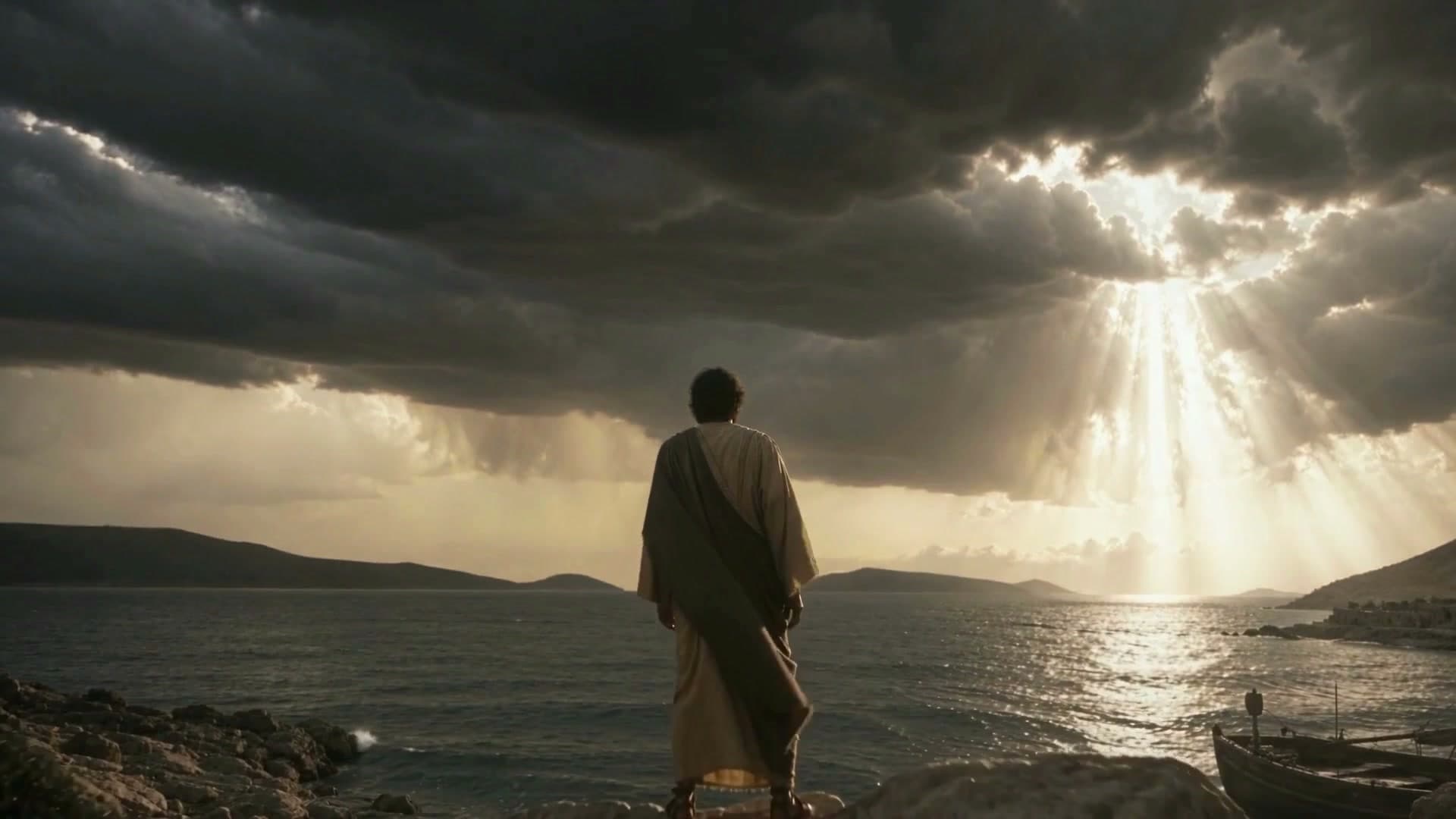
A project about looking before interpreting.
Apocalipsis.
01 / The idea
Fear is a poor interpreter.
The challenge was not to fill the screen with symbols. It was to lead the viewer from noise to reading: to open the text, establish its context and create a visual path they could follow.
02 / The film
First, watch it.
Full film · 01:21Picture and sound
The full film, with picture and sound, on mobile and desktop: from information overload to reading, context and an invitation to look again.
When everything speaks at once.
The opening brings headlines and news imagery together on a wall of televisions. The edit preserves the visible identity of the sources and turns news overload into the question that drives the whole film.
01 — Noise and attention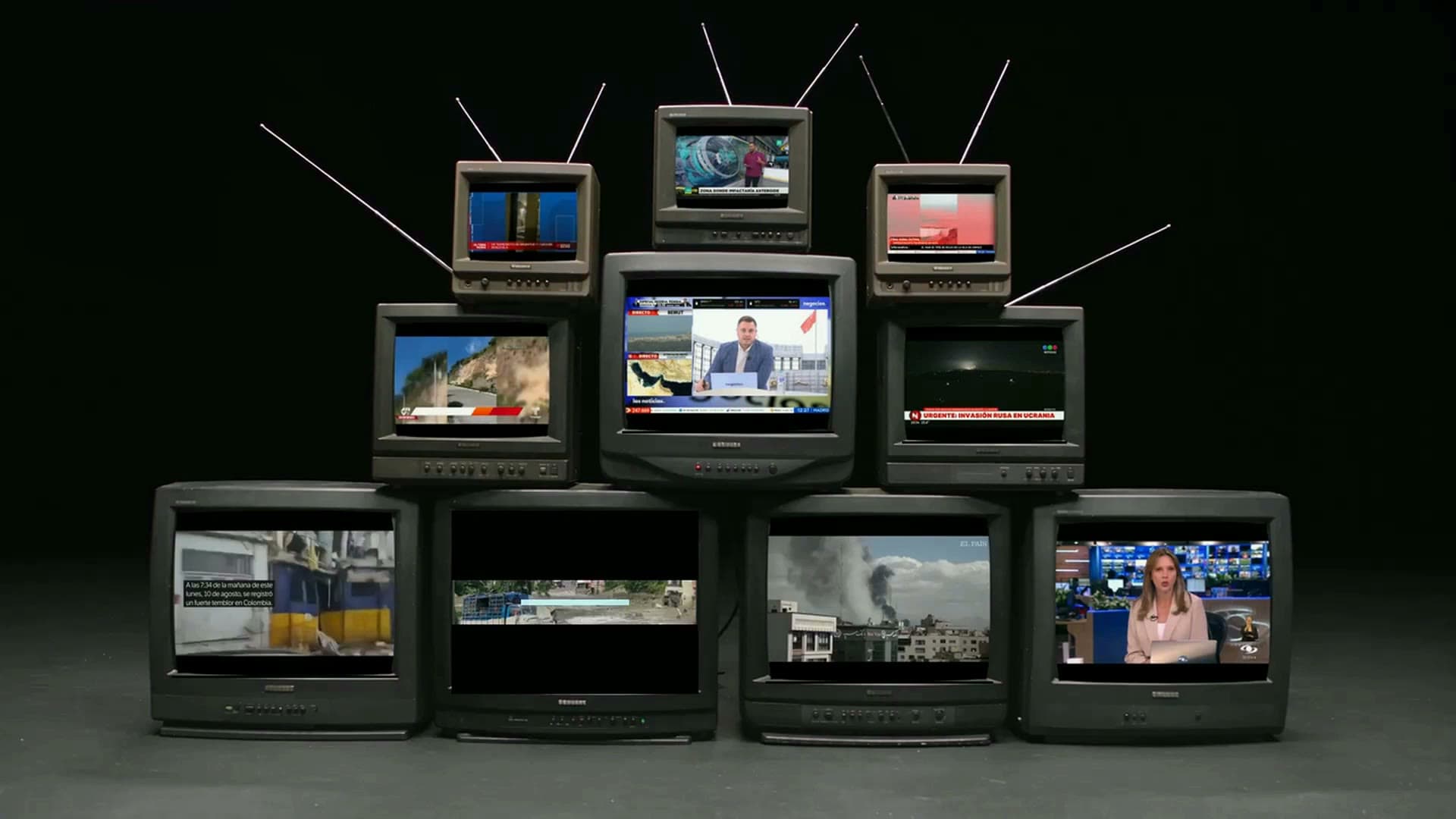
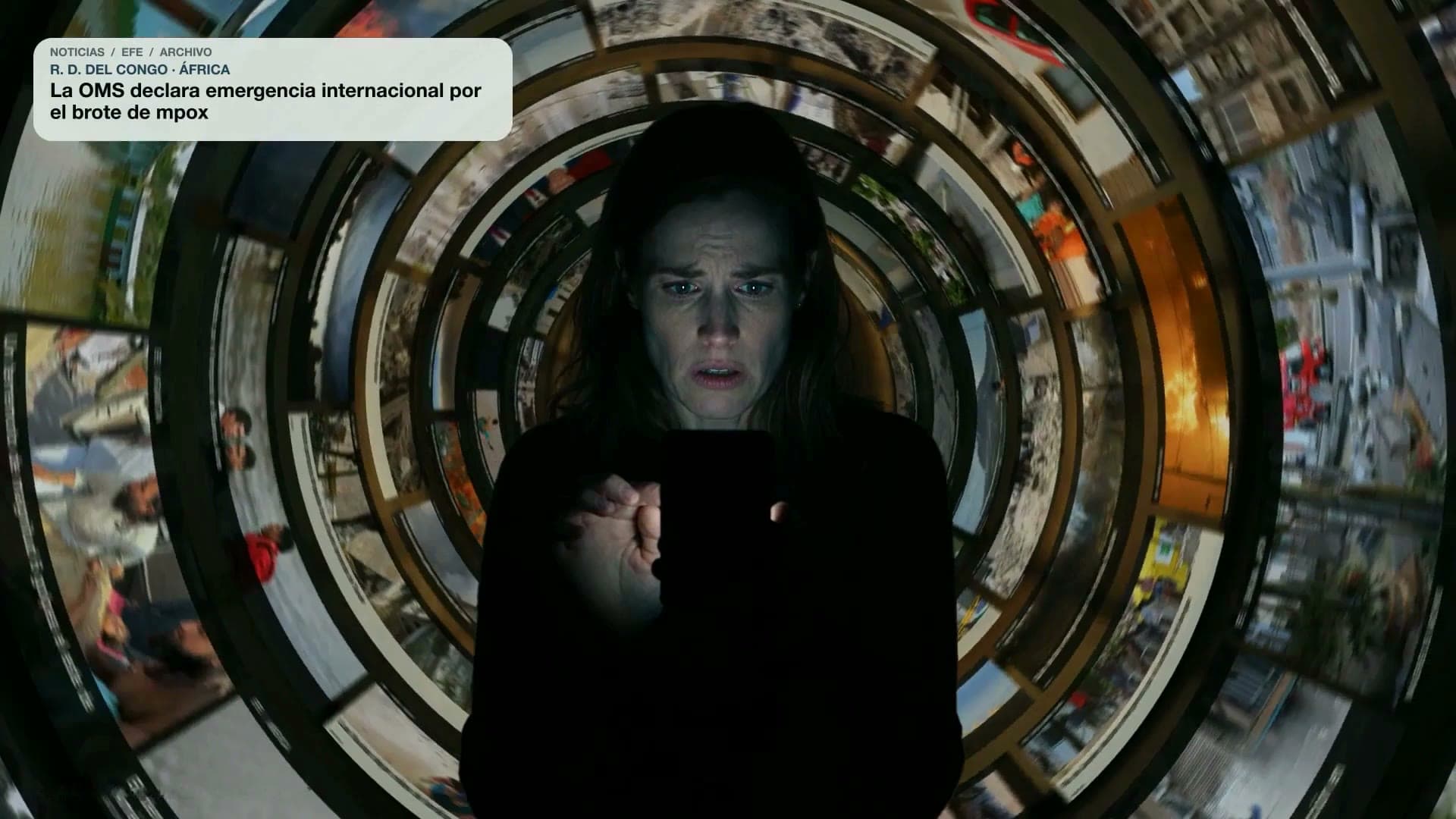
From noise to the text.
The first script decision was to pause a sensationalist reading. When the Bible enters the scene, the film changes pace and offers a concrete starting point.
02 — A new rhythm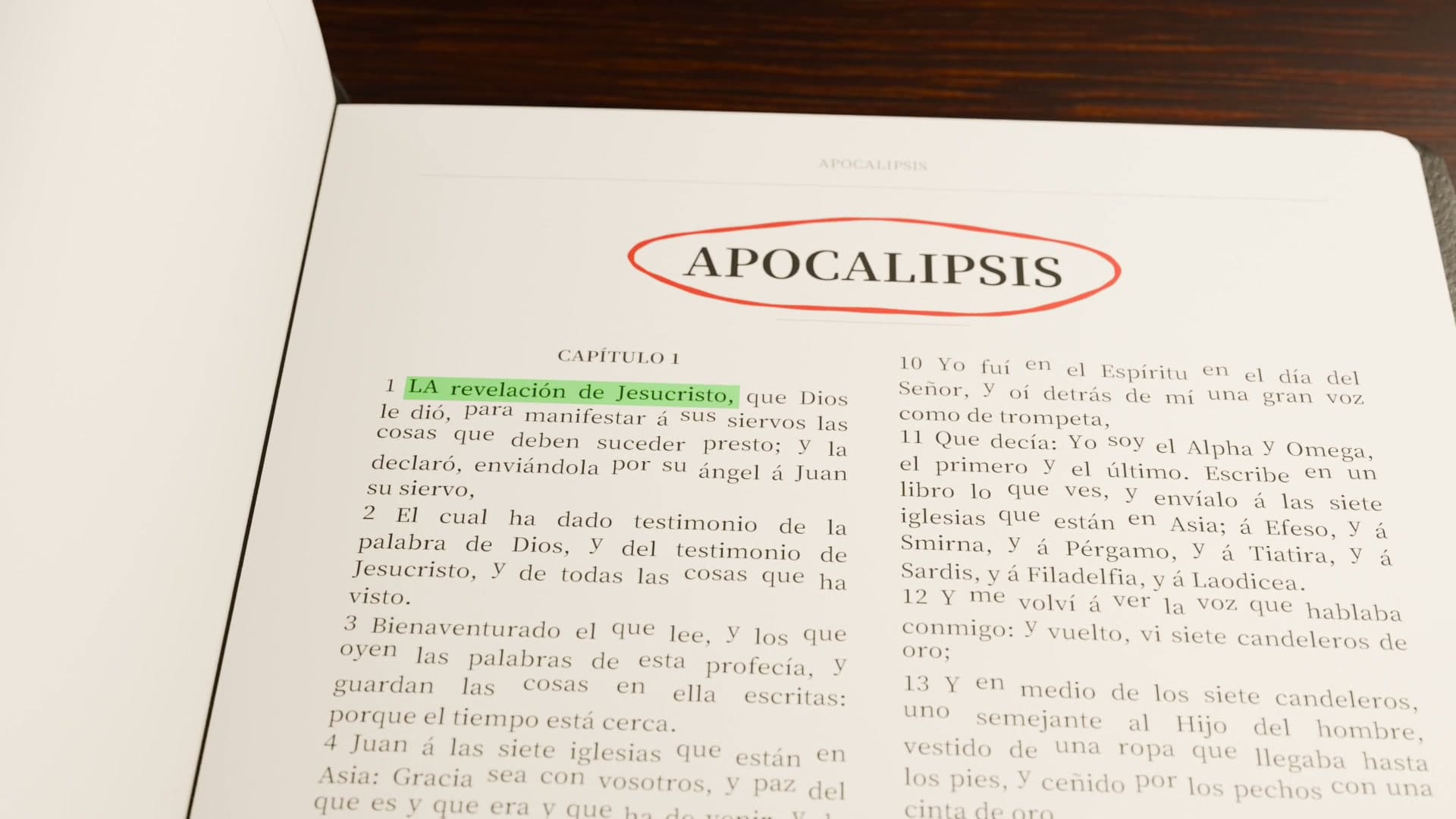
From the text to its context.
Patmos restores a human scale to the story. The symbols then become a graphic composition: each image has a role in the argument.
03 — Place and meaning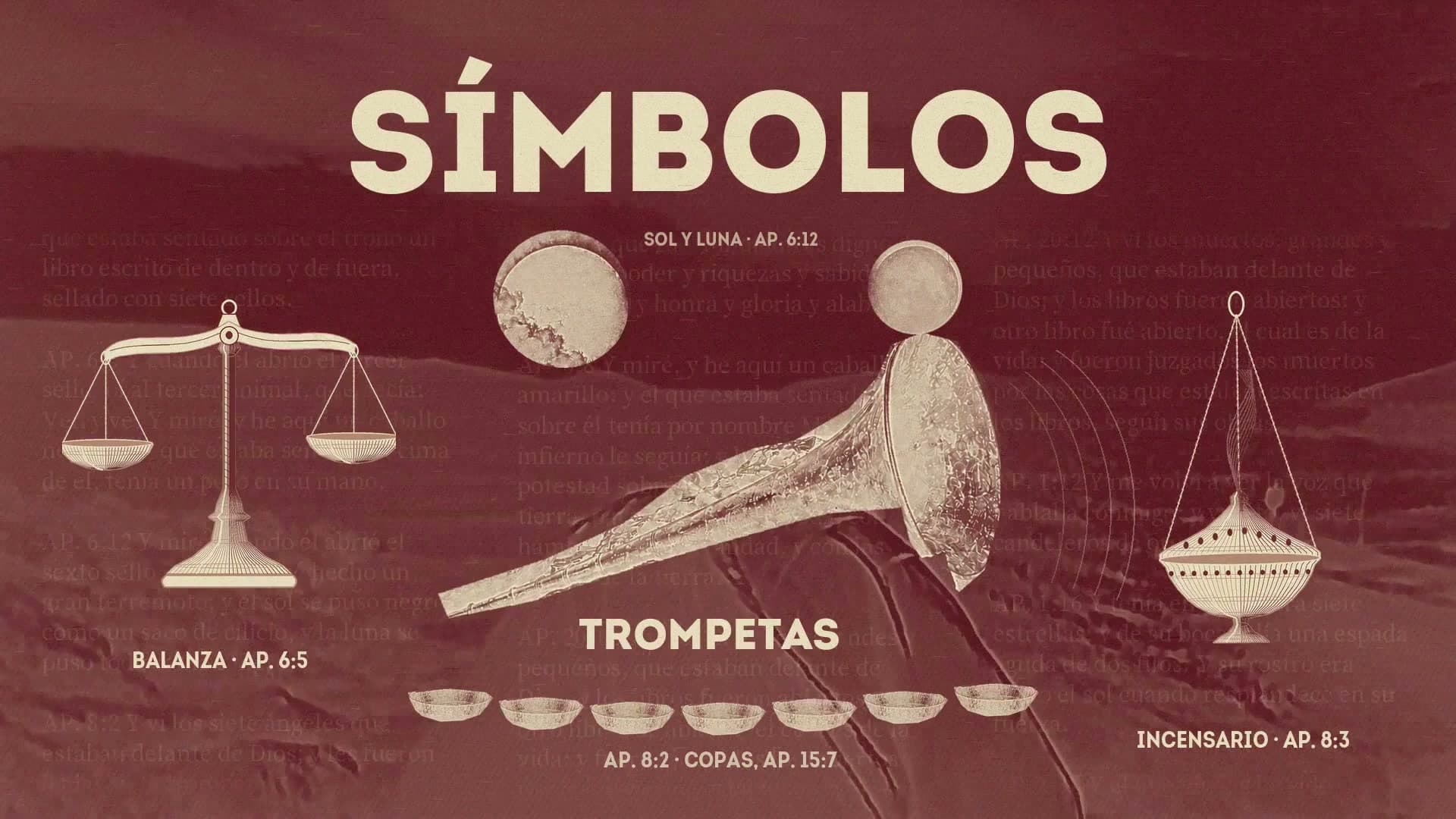
A thread guides the gaze.
The red thread connects the scenes and draws attention toward the Lamb. The movement does not decorate a phrase: it prepares the next idea and ties the piece together.
04 — Connection and destination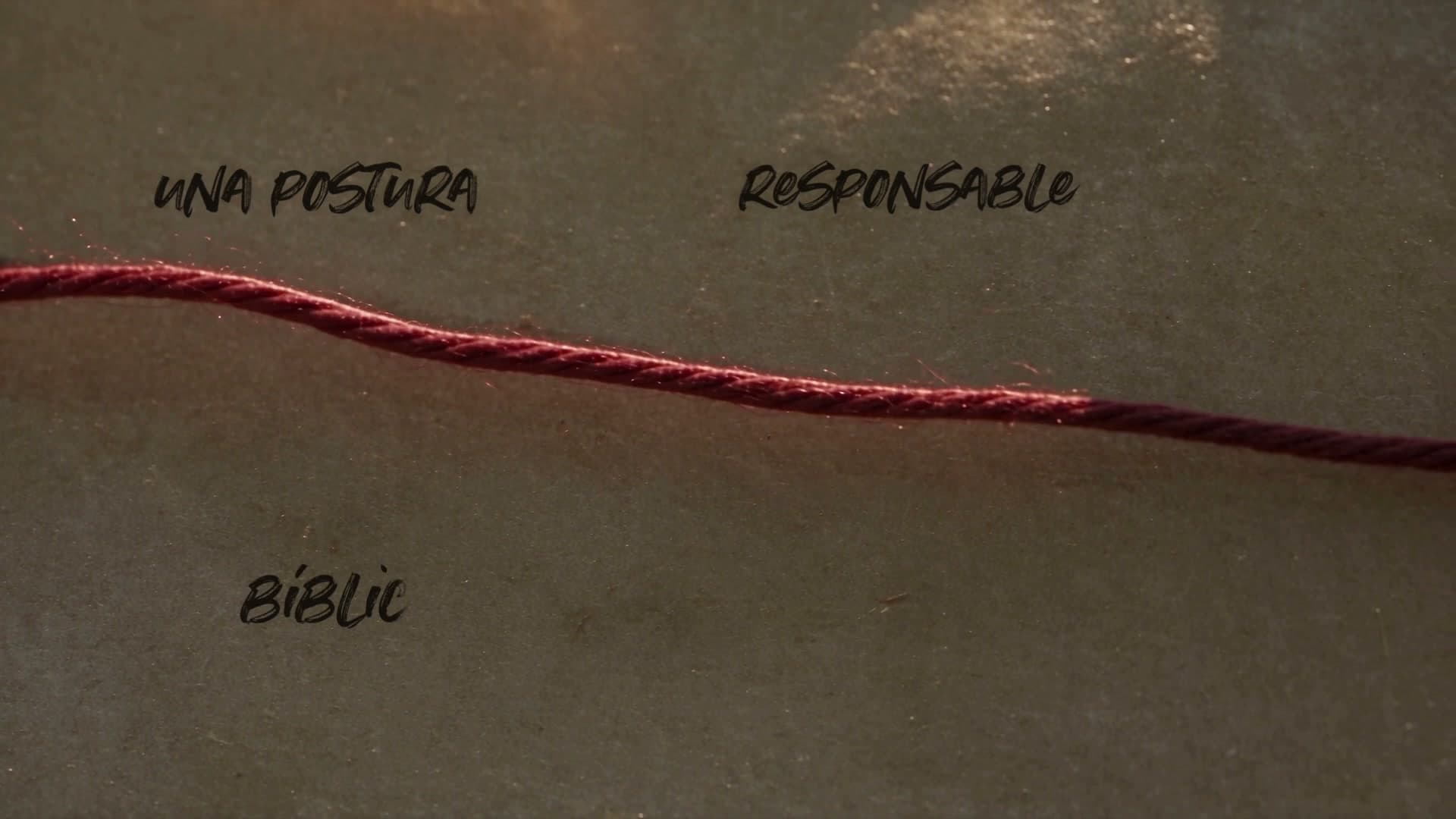
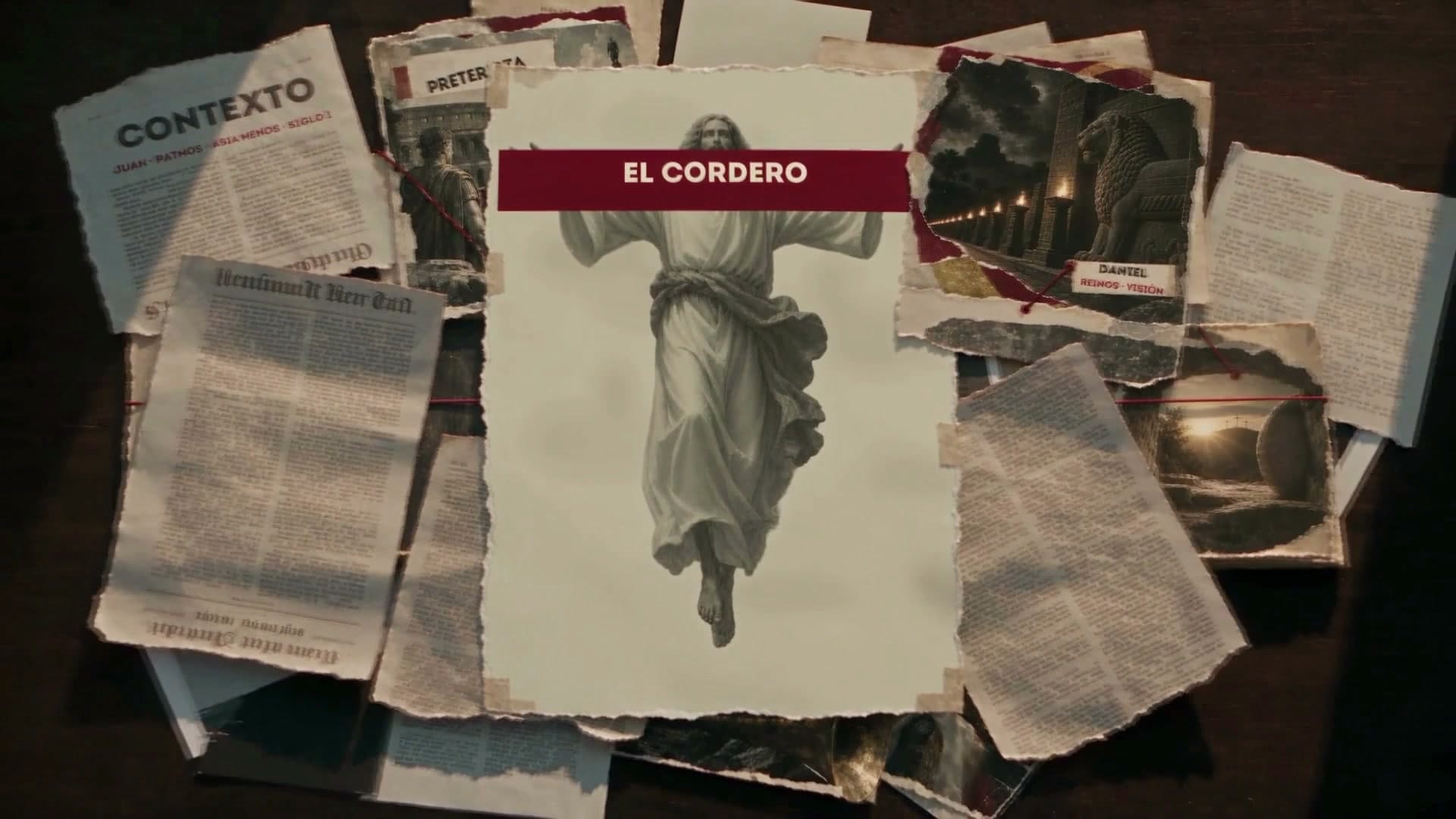
Give the story a sequence.
07 / My work
An idea written to be seen in motion.
Visual research, concept, script, image selection and creation, scene design.
Motion direction, compositing and animation in After Effects, transitions and pacing.
The full 81-second film with sound, in landscape and portrait versions composed for each screen.
A project for Escuela Bíblica Maná. Santiago Quiceno: concept, script, visual research, scene design and animation. The film incorporates news material identified on screen and the School’s identity.
Music: Reverie — Scott Buckley, edited and mixed excerpt under CC BY 4.0. Paper sound: Paper tearing — keweldog, CC0.